Deep Listening
Attend closely to the musical, relational and contextual cues that are already present.
Music Therapy × Music Education
A reflective, adaptive and relational orientation for making decisions in music therapy and music education.
BeforeThink deeply. Plan lightly.
DuringNotice carefully. Respond fluidly.
AfterRevisit compassionately. Adjust critically.
An Orientation, Not a Formula
An improviser begins with preparation and a sense of possible direction, while remaining ready to be changed by what happens.
This mindset treats uncertainty as something to work with. It balances structure with spontaneity, knowledge with intuition, and professional judgement with attention to the people in the room. The aim is not perfection, but responsive and purposeful musicking.
Four Interwoven Orientations
The mindset is a practice to return to, not a fixed state to achieve.
Attend closely to the musical, relational and contextual cues that are already present.
Let what is unfolding inform the next phrase, gesture, question or decision.
Hold plans as flexible structures that can change in response to participants and circumstances.
Think musically and relationally before, during and after practice.
The Reflective Framework
A dynamic cycle for planning, facilitating and evaluating sessions with intention, imagination and care.
Before · Reflection-for-action
Imagine forward. Draw on knowledge, context and past experience to prepare a flexible plan with enough shape for meaningful musicking and enough space for discovery.
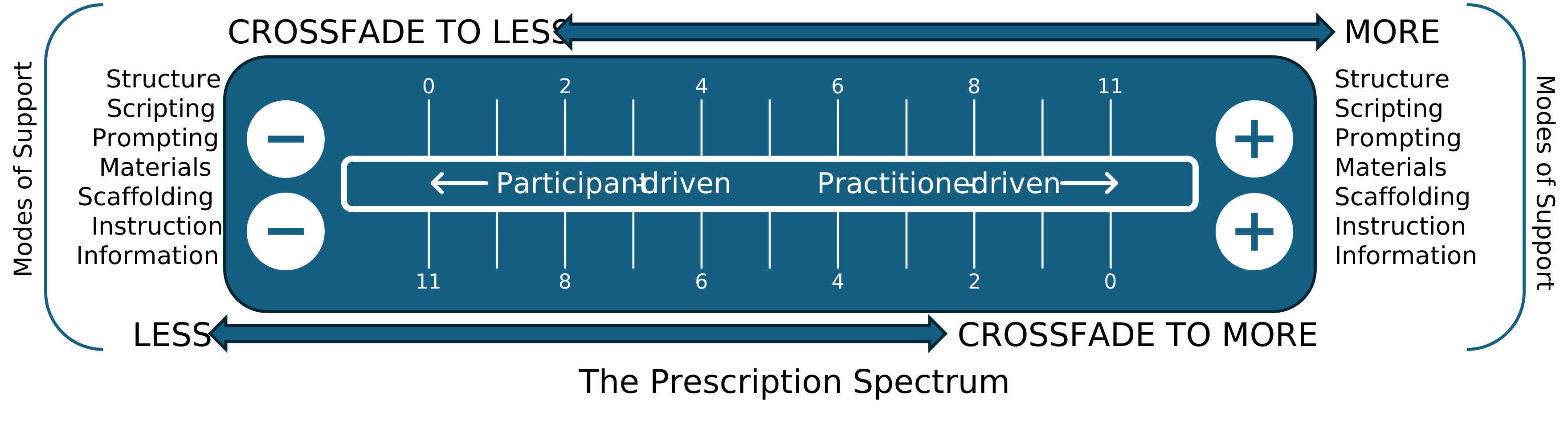
A Reflective Practice Tool
Consider how much support is useful at any given moment — and crossfade between participant-driven and practitioner-driven approaches.
Use the interactive device before, during or after a session to reflect on structure, scripting, prompting, materials, scaffolding, instruction and information.
Open the Interactive ToolThe Foundational Paper
Music Therapy With an Improviser’s Mindset: An Interdisciplinary Dialogue at the Intersection of Therapeutic and Educational Approaches
Al Fuller and Brad Fuller · Oxford University Press · 2026
Read About the Ideas and Authors Read the Original Paper